

 1 month ago
13
1 month ago
13
15 minutes ago
Theo Leggett,Transport Correspondentand Jemma Crew,Business reporter

 Getty Images
Petrol and diesel prices have fallen slightly for the first time since the US-Israel war with Iran, according to the RAC.
It follows weeks of rises after the effective closure of the Strait of Hormuz - a key transit route for oil and gas - dramatically pushed up wholesale prices.
Pump prices in the UK began to ease on Thursday and continued on Friday, the motoring organisation said.
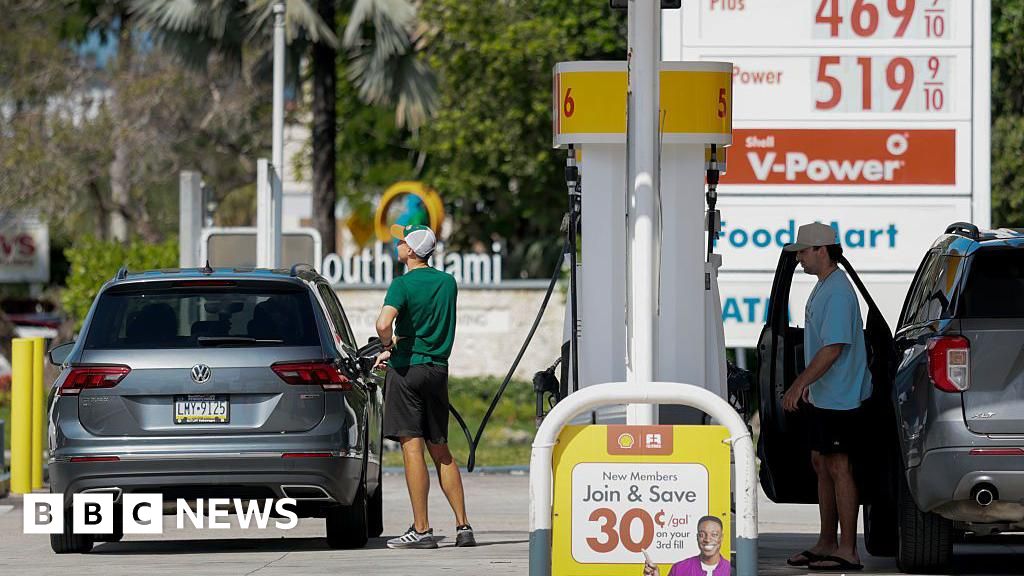
The decline has been very small - over the past two days diesel has come down by 0.6p and petrol by 0.3p. It is now just below 191p a litre for diesel, while petrol is just under 158p a litre.
Filling a car with diesel remains about £26 higher than in late February, while a tank of petrol costs nearly £14 more.
The RAC believes further falls can be expected, because costs on wholesale markets have remained below their recent peaks.
"We're hopeful there will be further reductions amounting to several pence a litre in the coming days," said Simon Williams, head of policy at the RAC.
"After record price rises, drivers will be relieved to finally see prices going the other way."
The rises over the past six weeks took the average cost of diesel from 142p a litre up to nearly 192p, and the cost of petrol from 133p to more than 158p.
But fuel prices remain below the levels reached in summer 2022 following Russia's invasion of Ukraine, when petrol reached 191.5p a litre and diesel hit 199p.
The increased cost of petrol and diesel – along with that of heating oil - has become a serious concern for people struggling to make ends meet.
According to the Office for National Statistics, the proportion of people reporting the price of fuel as a reason for increased living costs had risen to 75% in March, up from 38% in February.
Aman Navani, senior research and policy analyst at the Work Foundation at Lancaster University, said the survey suggested "growing anxiety among households about global economic shocks".
"The rise in fuel prices comes at a time when nominal wage growth has fallen sharply, and private sector workers have seen paltry real wage increases.
"Low-income and insecure workers have little buffer against rising costs as the impact of the war in the Middle East hits the UK."
The fuel price increases were driven by a steep rise in the price of crude oil following the outbreak of hostilities in the Gulf.
The region usually provides about a fifth of the world's oil supply, but shipments have been blocked for the past six weeks due to the effective closure of the Strait of Hormuz – a narrow maritime corridor which connects the Gulf to the Arabian Sea.
Prior to the conflict, Brent crude was trading at just under $70 a barrel. It subsequently went up quickly, rising above $100 in mid-March and peaking at just over $119.
However, since the announcement of a temporary ceasefire earlier this month oil prices have retreated back below the $100 mark.
Motoring groups say a $10 movement in the cost of oil will generally prompt a 7p change in prices at the pump.


















 English (US) ·