

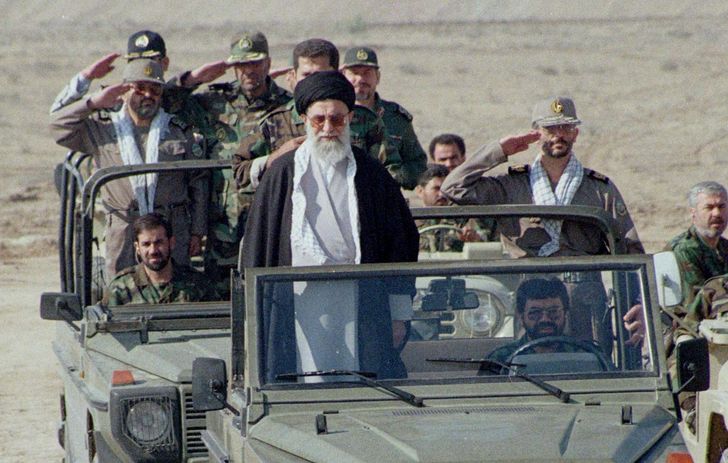
The debate among Iranian hardliners over whether Tehran should pursue a nuclear weapon in defiance of escalating U.S.-Israeli attacks is growing louder, more public, and increasingly urgent, according to sources within the country.
Following the reported killing of Supreme Leader Ayatollah Ali Khamenei at the onset of the war on February 28, the balance of power has shifted. The Revolutionary Guards are now said to be more dominant, and hardline views on Iran’s nuclear strategy are gaining influence, according to senior sources.
While Western nations have long suspected Iran of seeking nuclear weapons capability, Tehran has consistently denied this. Officials have pointed to Khamenei’s stance that nuclear weapons are forbidden in Islam, as well as Iran’s commitment to the Nuclear Non-Proliferation Treaty (NPT).
However, there is no confirmed decision yet to change Iran’s nuclear doctrine. One source noted that while no formal move toward building a bomb has been made, influential voices within the establishment are now openly questioning the current policy and calling for a shift.
Recent U.S.-Israeli strikes, which occurred during ongoing discussions over Iran’s nuclear program, appear to have altered strategic calculations. Some Iranian analysts now believe there is little advantage in refraining from developing nuclear weapons or remaining within the NPT.
The possibility of withdrawing from the NPT, once a largely rhetorical threat, is now being discussed more openly in state-aligned media. Commentary has also begun to explore the idea of Iran directly pursuing nuclear weapons, an issue that was previously considered too sensitive for public debate.
A prominent political figure recently suggested suspending Iran’s participation in the NPT while assessing its value to the country. Others have echoed similar sentiments, arguing that Iran must reconsider its commitments based on evolving security threats.
Despite these developments, Iran has historically used such threats as leverage during negotiations with Western countries, without actually exiting the treaty. The current shift in tone may reflect a similar strategy.
There is also uncertainty over how quickly Iran could move toward developing a nuclear weapon, especially after sustained airstrikes targeting its nuclear and military infrastructure in recent weeks.
Analysts have long believed Iran’s strategy was to become a “threshold state”—maintaining the capability to produce a nuclear weapon quickly if necessary, without fully committing to building one.
In the past, senior military figures have warned that Iran could pursue nuclear weapons if the country’s survival were at risk, conditions that some argue may now be present.
Khamenei’s longstanding religious position against nuclear weapons, though not formally documented, had been a key factor in shaping Iran’s stance. With his reported death, questions are emerging about whether that position still holds, especially as more hardline voices gain prominence within the leadership.










 English (US) ·