

 1 month ago
At Sychnant Pass today, there are slight green shoots of recovery visible among the charred hillside.
But Jones described a rare ecosystem housing specialist plants, butterflies and insects, "where the UK is the epicentre globally".
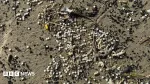
"We've probably lost about 10 centimetres of soil here [at Sychnant Pass] so we've lost all of that organic matter layer... 4,000 years of carbon gone in a single event," he said.
"Once the topsoil is gone, we can never recover that.
"People see the blackened vegetation and assume that's the main impact, but the real story is below our feet.
"This soil acts as a water sponge, a carbon store, a nutrient bank.
"Losing it is a double whammy, it worsens climate change and makes the habitat far more fragile."
He added: "This site has taken thousands of years to develop and it's all gone in maybe five days? It's incredible.
"If we are going to try and put that soil back, generate artificial soils through the reuse of organic wastes for example, then it's important we understand what the soil quality is now.
"So that we can prepare for the future and design those soils, because they don't exist yet."
Over recent weeks the Bangor team has been racing to collect soil samples at several sites across Wales before heavy winter rainfall washes away the remains.
Their work has included comparing the burnt land with adjacent untouched areas, allowing researchers to measure changes in soil carbon, nutrients, microbial activity, water repellency and erosion risk.
Even NASA satellite data has been used to quickly identify new sites after fires have occurred.











 English (US) ·