

 1 month ago
She said European eels had catadromous breeding, which meant they hatched in the Sargasso sea in the Atlantic Ocean, grew up in freshwater environments and then spawned back in the sea.
The eels are strong swimmers, emerge to hunt at night and, according to some sources, can live up to the age of 80, the ecologist added.
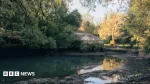
Burgoine said the Nature Commission and Guernsey Water were conducting environmental DNA sampling in the island's freshwater ponds and streams in a bid to gather more information as to where eels were present.
She said freshwater habitats were declining due to drainage and land clearance, habitat mismanagement and pollution.
"As such waterbodies are becoming more fragmented and isolated which may prevent eels from moving between them.
"Also, infrastructure along the coast and further inland, such as pipes and dams, makes it harder for returning eels to migrate inland to their feeding grounds," she added.
"These species are declining globally so it would be great to understand more about populations on island."
Follow BBC Guernsey on X, external and Facebook, external and Instagram, external. Send your story ideas to channel.islands@bbc.co.uk, external.
















 English (US) ·